

What Is a
Taper?
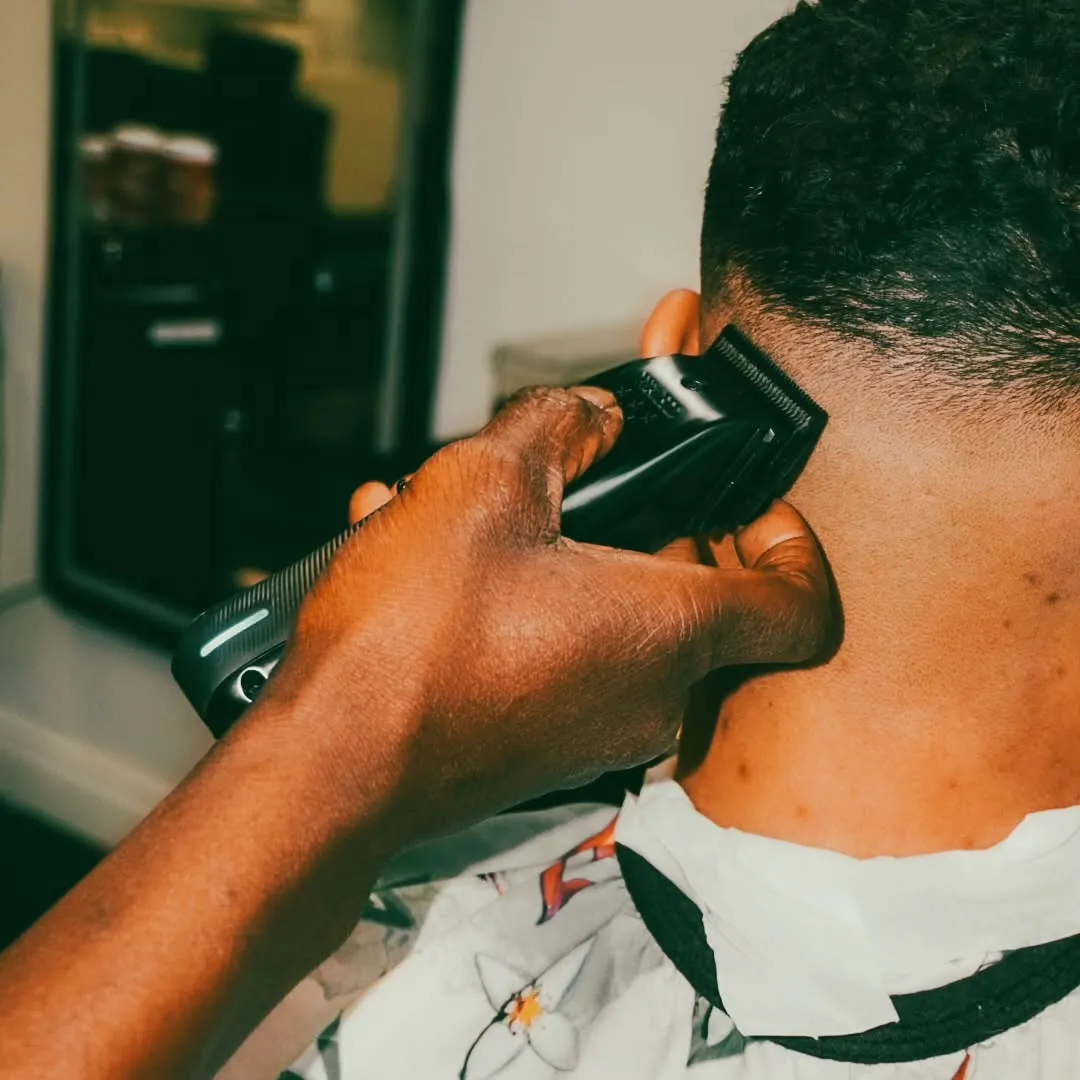
A taper is the more conservative of the two. Your barber gradually reduces the length of your hair as it moves down the sides and back, using progressively shorter clipper guards. The hair gets shorter but never fully disappears. At the neckline and around the ears, you will still have some length remaining.
The classic taper has been a staple of men's grooming for decades. It works with almost any hair type and length on top. If you are the type who gets a cut every 3 to 4 weeks rather than every 2, a taper grows out more gracefully than a fade.
There is a reason for this. Tapers incorporate more scissor work to soften the transition lines. Scissors create a cleaner, softer cut on each hair strand compared to clippers, which leave a harder, blunter edge. That softer edge means the hair grows back in more evenly, so the shape holds its structure longer between visits.
Good for
Professional settings, first-time short haircuts, guys who prefer a subtle transition, hair that grows fast, and anyone who goes 3+ weeks between cuts.
Types of
Tapers Explained
Low Taper
The hair starts tapering just above the ears and around the neckline. This is the most subtle option and the easiest to maintain. It gives your hairline a clean look without cutting off too much length. A solid choice if you want a polished appearance that works in any setting.
Mid Taper
The taper starts around the temple area, roughly at the midpoint of the sides. It offers more contrast than a low taper while still keeping things conservative. Works well with textured crops and side parts.
High Taper
The taper begins a couple of inches above the ears, creating more visible contrast between the top and sides. Often paired with comb overs, pompadours, and modern high tops to add visual weight to the top.
Skin Taper
The hair tapers down until the scalp becomes visible, but without the abrupt transition of a skin fade. Think of it as the bridge between a traditional taper and a fade. Great for warmer months when you want less bulk on the sides.
Tapered Neckline
This specifically refers to how the hair ends at the back of the neck. A tapered neckline follows the natural hairline and grows out the most gracefully. Rounded or blocked necklines require more frequent visits to maintain their shape.
What Is a
Fade?
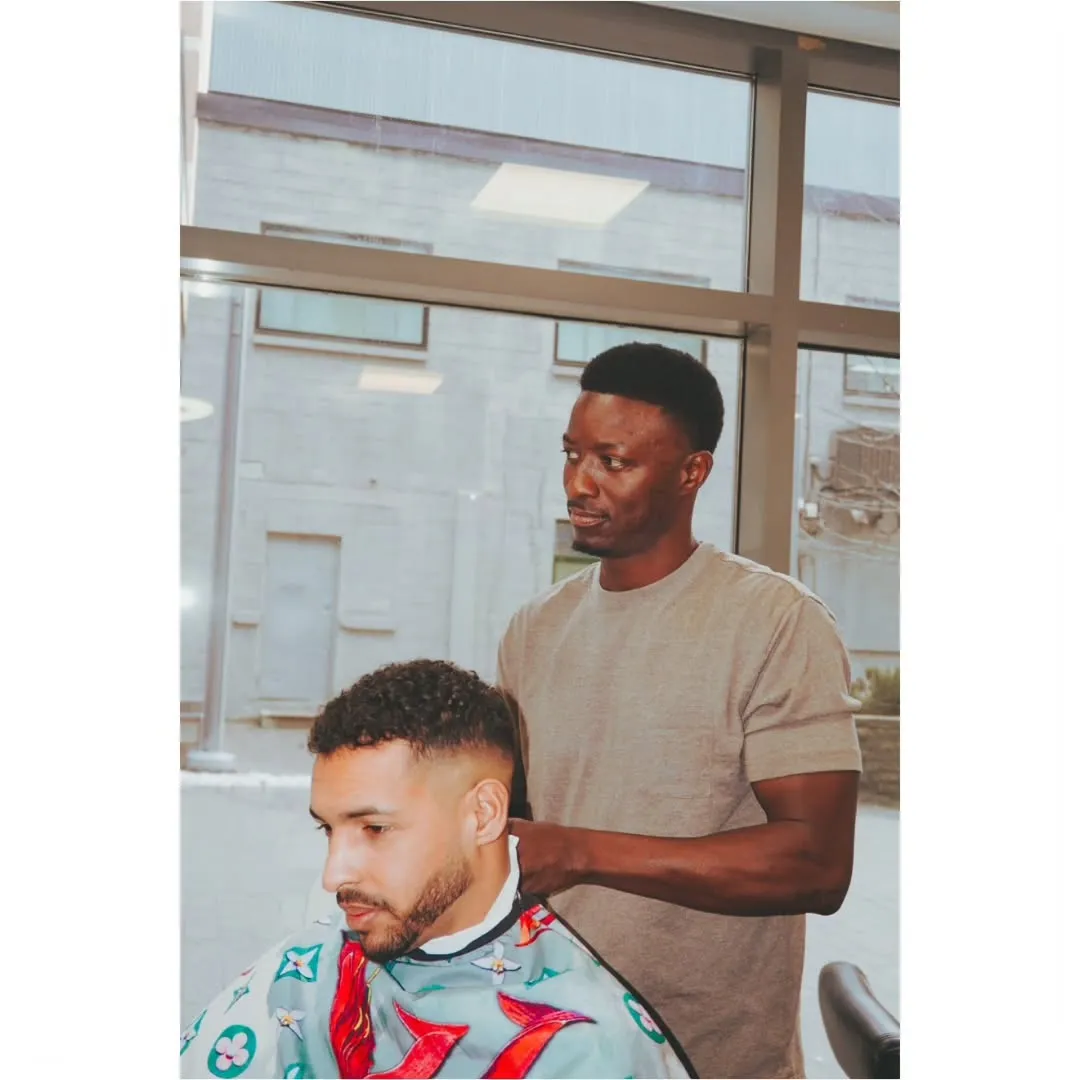
A fade takes the taper concept further. Instead of leaving some hair at the shortest point, the barber blends the hair down to the skin (or extremely close to it) using a combination of clipper-over-comb, open and closed lever technique, and foil shaving or straight razor work on the perimeter.
The result is a cleaner, more defined look. Fades create a sharper contrast between the longer hair on top and the shorter sides, which is why they have become the go-to for men who want a modern, polished appearance.
Types of
Fades Explained
Skin Fade (Bald Fade)
The hair is tapered all the way down to the skin using a combination of trimmers and a straight razor. This is the sharpest, most dramatic fade and one of the most requested cuts at our Liberty Village shop. It requires the most skill to execute cleanly, which is why you want a barber with steady hands and an eye for symmetry.
Low Fade
The fade starts just above the ear and around the neckline. This keeps most of the sides intact and is a great middle ground between a full taper and a skin fade. Popular with our clients in the financial and tech industries who want a clean look without going too bold.
Mid Fade
The fade starts at the temple, roughly at the midpoint of the sides. This is the most versatile option. It shows enough contrast to look sharp while remaining balanced. Works well with curly hair, textured crops, and pompadours.
High Fade
The fade starts near the top of the head, removing most of the hair on the sides. This creates maximum contrast and is especially popular with short, textured styles on top. If you want your top length to really stand out, this is the way to go.
Drop Fade
Instead of following a straight line around the head, the fade drops lower behind the ear and curves down toward the nape. This adds a natural, flowing shape to the cut. Particularly flattering on round face shapes because it creates the illusion of a longer, more angular jawline.
Undercut Fade
The sides and back are cut to one uniform short length (or skin) with a distinct disconnection from the longer hair on top. The fade is then blended into that disconnected section. Think Peaky Blinders. Works especially well with long hair on top since the length contrast makes a bold statement.
Burst Fade
The fade radiates outward from the ear in a semicircular pattern. Often paired with mohawks, mullets, or longer styles on top. A statement cut that requires a barber who understands shape and symmetry.
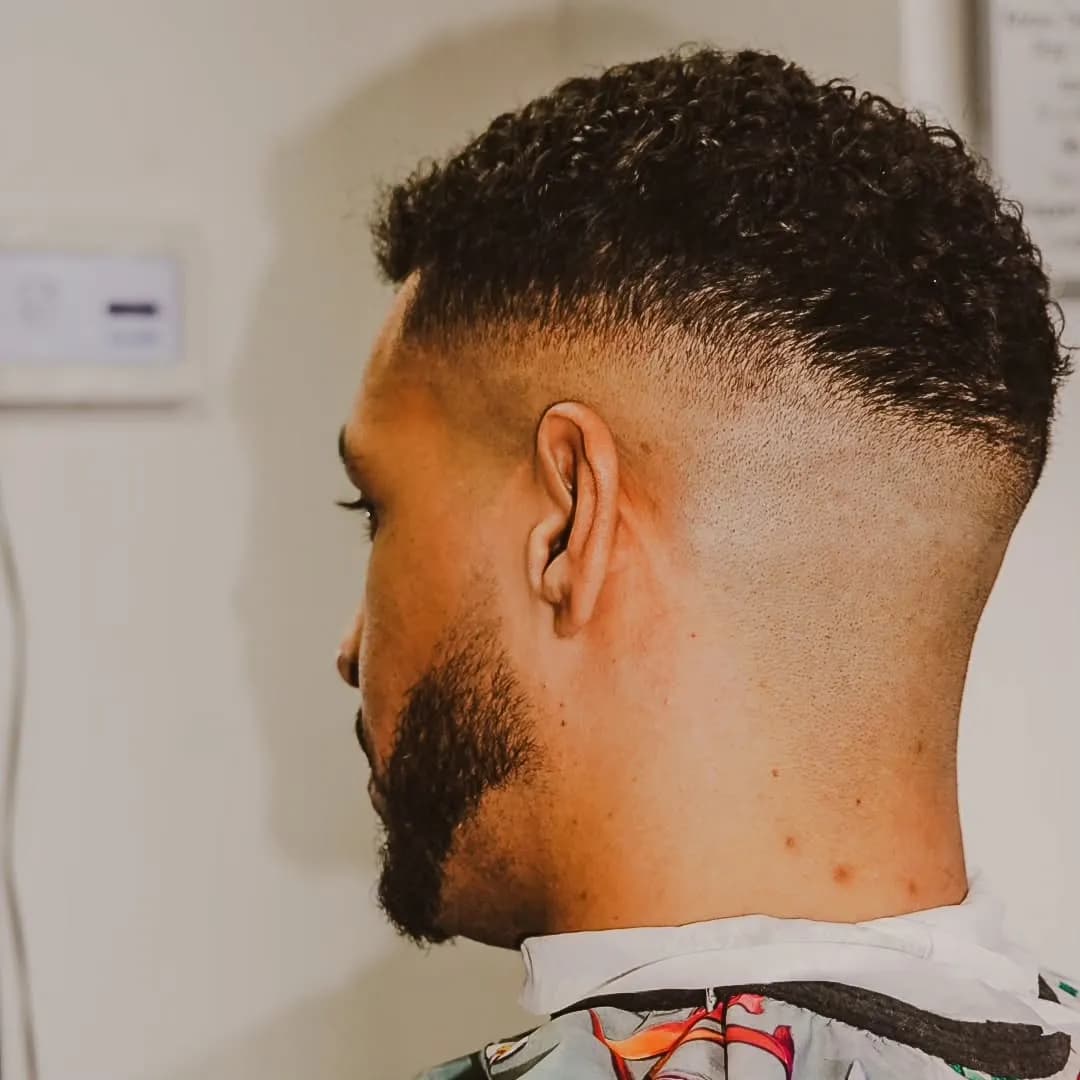
How We Check a
Clean Fade
A fade is built in small passes, not one big move. At Barberhood, your barber is watching how the blend reacts to your growth pattern, cowlicks, head shape, and hair density while the cut is happening. The goal is not just a sharp photo at the end. It is a cut that still looks intentional after you shower, style it yourself, and live in it for a week.
The blend matches your hair, not a template
Fine straight hair needs softer transitions because every shadow shows. Dense or curly hair needs a different hand because the texture can hide weight until the cut settles. A clean fade is adjusted to the head in the chair.
The weight sits in the right place
Some fades look clean at the bottom but heavy around the temple or crown. We check that upper transition carefully so the top does not look disconnected from the sides.
The outline frames your face
Ears, temples, neckline, and beard connection all matter. Straight razor detailing gives the fade its final shape without pushing the hairline into an unnatural spot.
The cut survives normal life
A good fade should still make sense after your first wash and style at home. It will soften as it grows, but it should not collapse into harsh patches after a few days.
Why this matters
Toronto has every hair type walking through the door: straight, wavy, curly, coarse, fine, thick, thinning, and everything between. That variety is why technique matters. The best fade for you is the one shaped around your actual hair, not the one copied from a screenshot without adjustment.
Best Fade for
Your Face Shape
Your face shape plays a bigger role in how a cut looks on you than most people realize.
Oval Face
Most cuts work well. Mid fades and tapers are especially flattering. You have the most flexibility.
Round Face
High fades and drop fades add vertical length and create angular definition. Avoid low tapers that add width.
Square Face
Low to mid fades soften strong jawlines. Textured tops complement the natural angles of your face.
Oblong / Long Face
Low fades and tapers work best. Avoid high fades, which can make a long face appear even longer. Keep some volume on the sides.
Not sure about your face shape? At Barberhood, every cut starts with a consultation about what works for your features, hair texture, and lifestyle.
What Is a
Taper Fade?
You will hear this term thrown around a lot. A taper fade is a hybrid that combines both techniques. The upper portion of the sides uses a gradual taper transition, while the lower portion near the hairline blends into a fade, often all the way down to the skin.
This gives you the best of both worlds: the length and styling versatility of a taper on the upper sides, with the sharp, clean finish of a fade at the bottom. It is one of the most requested styles we see at Barberhood because it works in both professional and casual settings.
The key thing to know is that "taper fade" is not one specific cut. It is a spectrum. You can get a low taper fade (subtle), a high taper fade (dramatic), or anything in between. That is why reference photos matter so much. Two people asking for a "taper fade" might have completely different cuts in mind.
Bottom Line
If you want a clean, modern look but are not ready for a full skin fade, ask for a taper fade and specify where you want the fade to start. Bring a photo to show your barber exactly what you mean.
Skin Fade vs Taper
And Every Variant Between
Most of the confusion between all these cuts disappears once you answer two questions our barbers ask in every consultation. First, how much scalp do you want to show? Second, how often are you honestly coming back to the shop? A skin fade shows the most scalp and demands the most upkeep. A classic taper shows none and forgives a missed appointment. Every other variant sits somewhere on that line.
Here is how the variants we cut every week at Barberhood compare, from the boldest to the most conservative:
| Cut | Shortest Point | Looks Fresh For | Ask For It When |
|---|---|---|---|
| Skin fade | Bare skin | 1 to 2 weeks | You want maximum contrast and do not mind frequent touch-ups |
| High fade | Skin or near-skin, starting above the temples | 1 to 2 weeks | You want the boldest silhouette and a strong jaw-framing effect |
| Mid fade | Skin or very short, starting at the temples | 2 weeks | You want a modern look that still reads clean in an office |
| Low fade | Short, just above the ears | 2 to 3 weeks | You want subtle sharpness without an obvious haircut-day look |
| Drop fade | Follows a curve that drops behind the ear | 2 weeks | You want the fade to hug the natural shape of your head, great with curls |
| Burst fade | A rounded burst around the ear only | 2 weeks | You keep length in the back (mullets, mohawks) but want clean sides |
| Taper fade | Skin only near the hairline and neckline | 2 to 3 weeks | You want fade sharpness at the edges with taper length everywhere else |
| Classic taper | Never skin, just gradually shorter | 3 weeks or more | You want the most conservative, low-maintenance professional cut |
The two variants people mix up most are the drop fade and the burst fade. A drop fade is a full fade whose line dips down behind your ear, following the curve of your head instead of running straight. A burst fade only fades in a semicircle around the ear itself and leaves the back of your neckline intact, which is why it pairs with styles that keep length in the back. If you point at the area behind your ear during the consultation, your barber will know exactly which one you mean.
The 10-Second Answer
Skin fade if you want to show scalp and can come in every two weeks. Classic taper if you never want to show scalp and want the cut to last three or more. Everything else is a trade-off between those two, and the table above tells you where each one lands.
Real Cuts, Real Clients
Long hair to short taper fade
“I went from long hair to a short taper fade, and he nailed the transformation. The attention to detail was awesome.”
Ronak, Google review · cut by Brigen
High-and-tight high fade
“A style that leaves very little room for mistakes. The fade was seamless, the transition was perfectly blended.”
Fabio, Google review · cut by Simba
Regular skin fades
“Mike from day one listens to what you want... always leave happy with his work, clean fades always!”
Jack, Google review · cut by Mike
Fades From
The Shop Floor
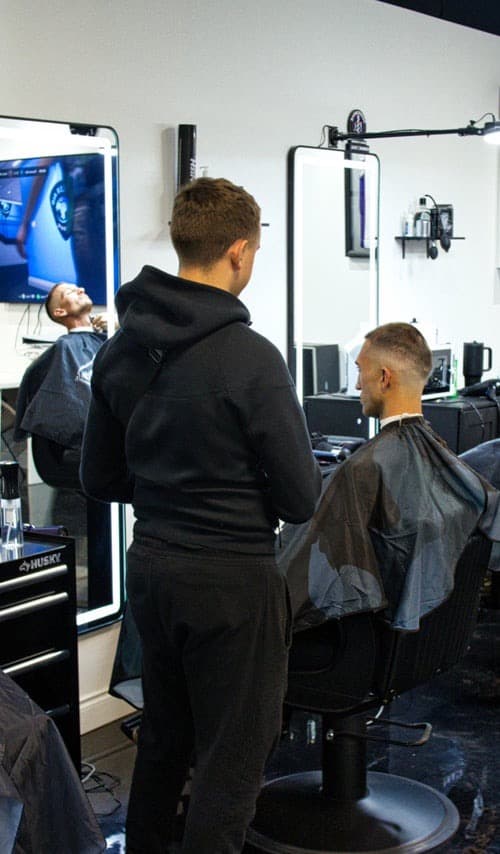
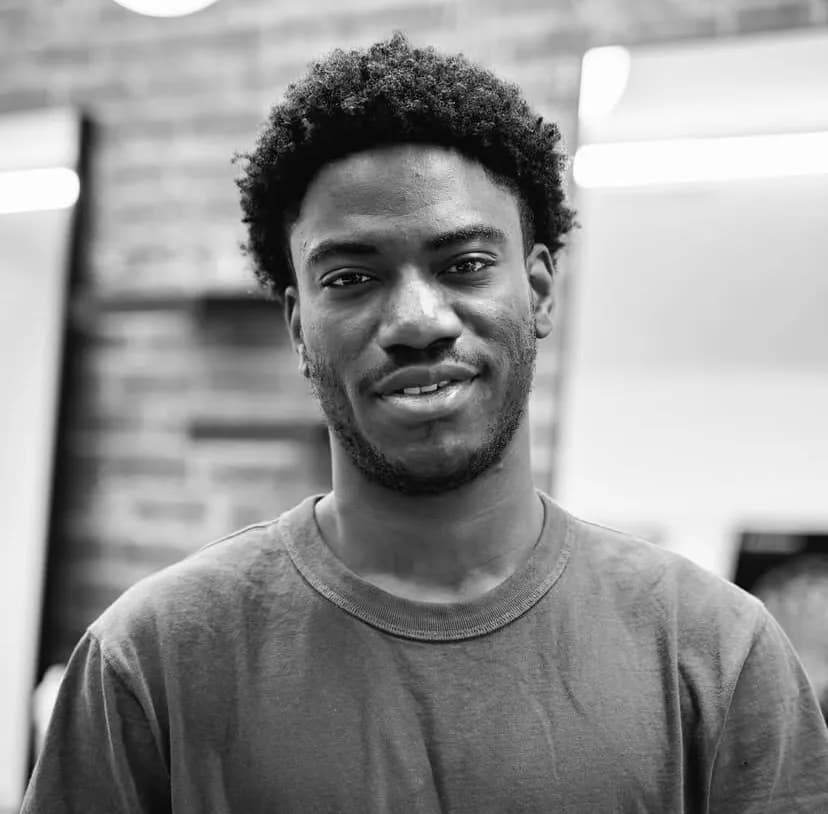
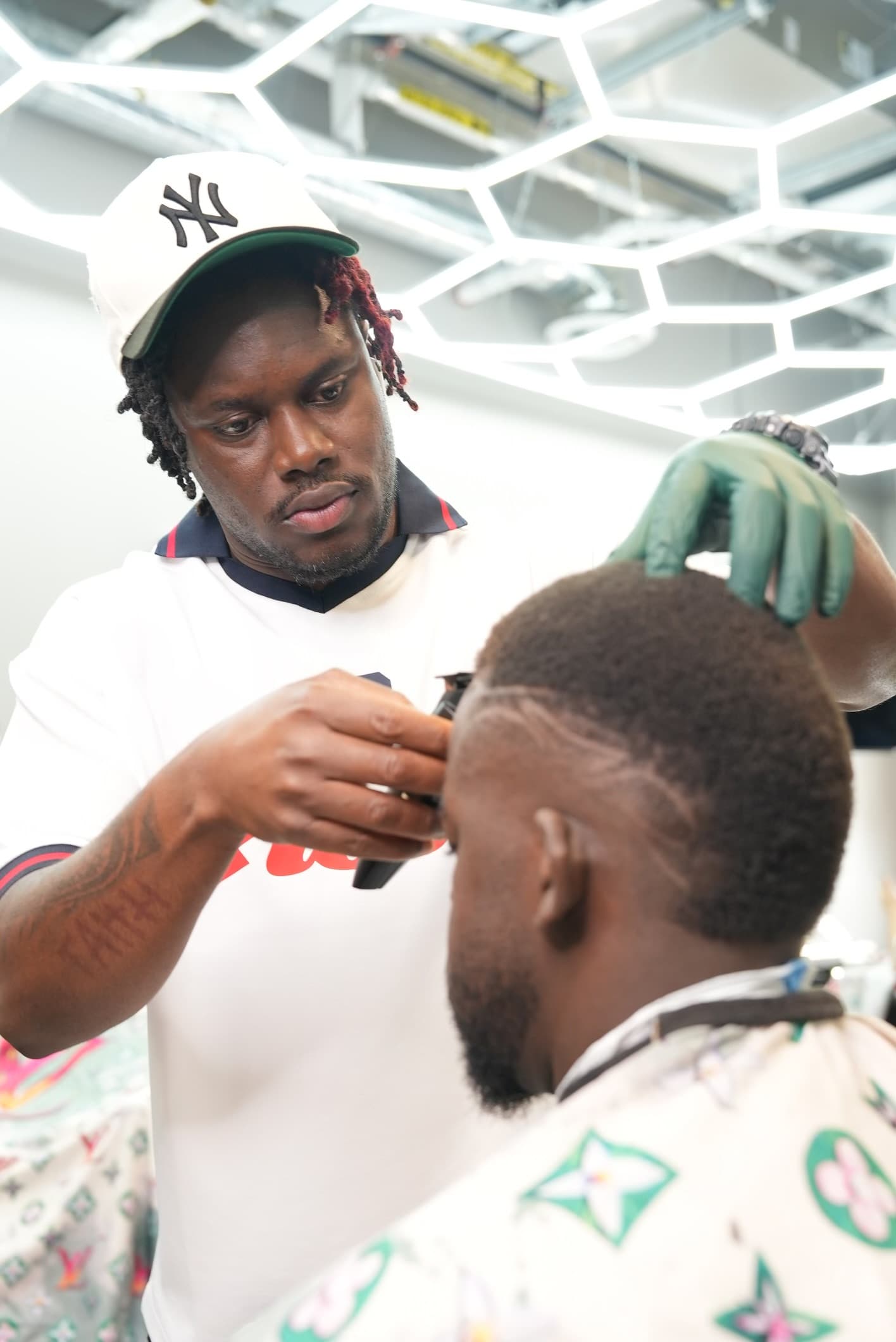
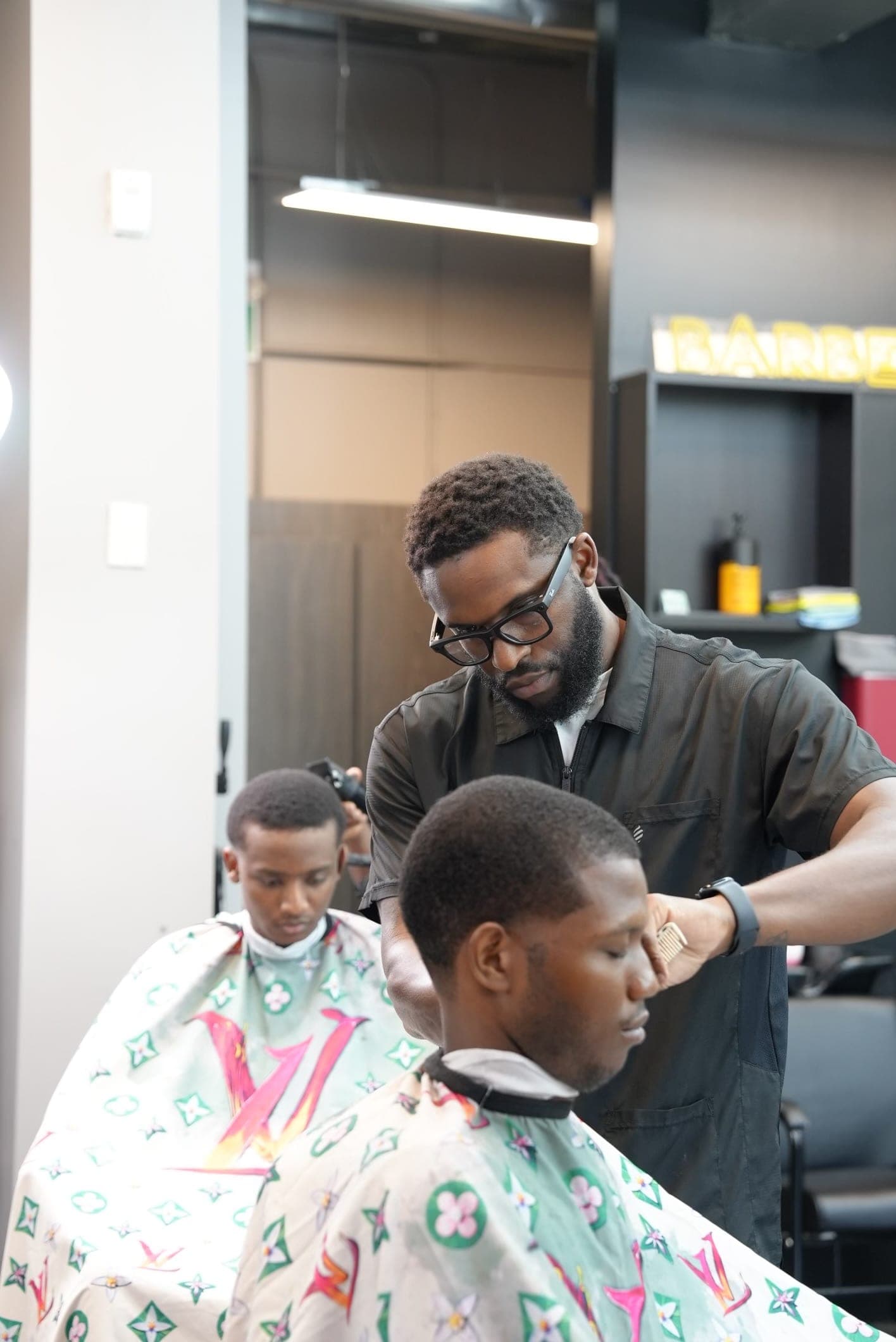
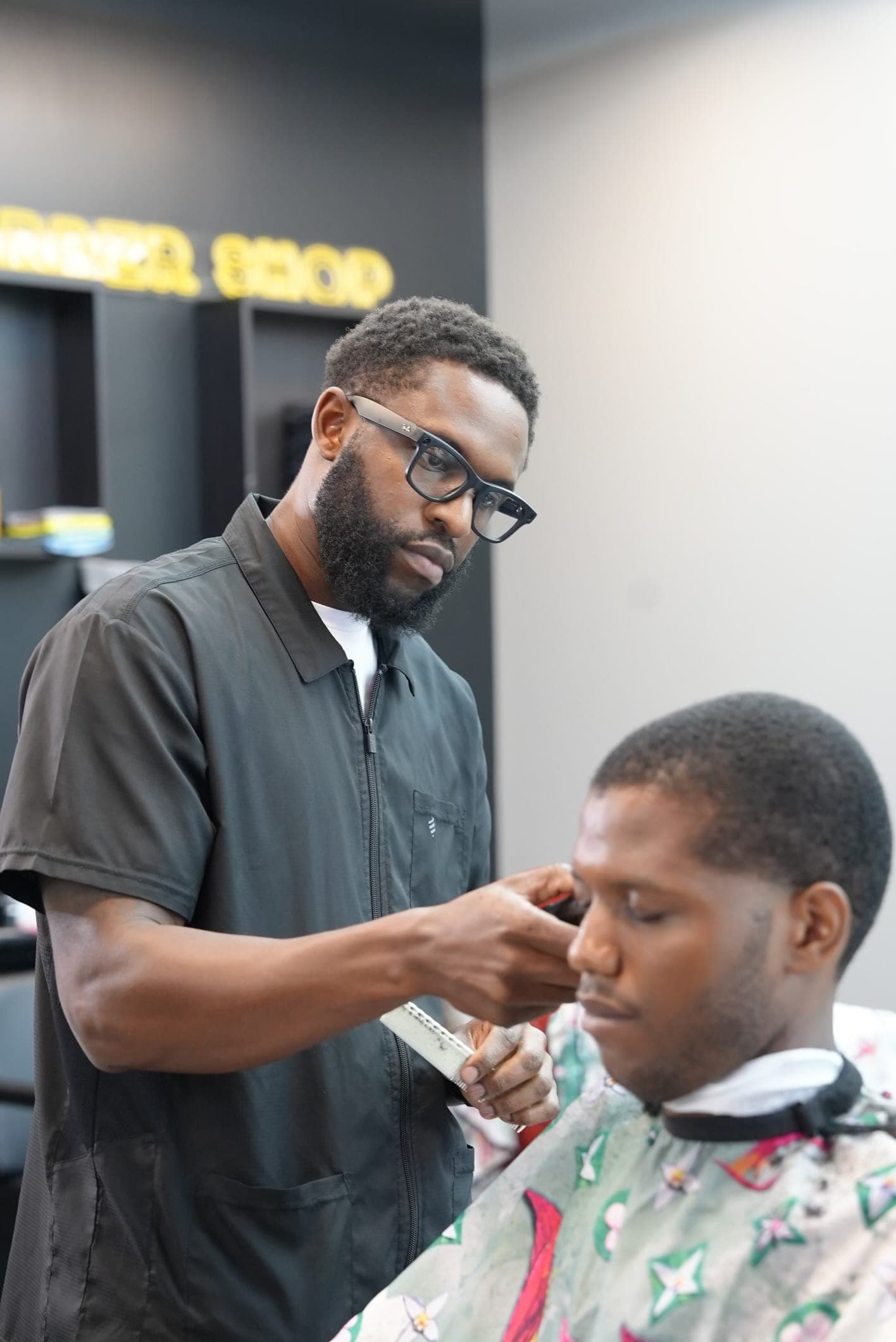
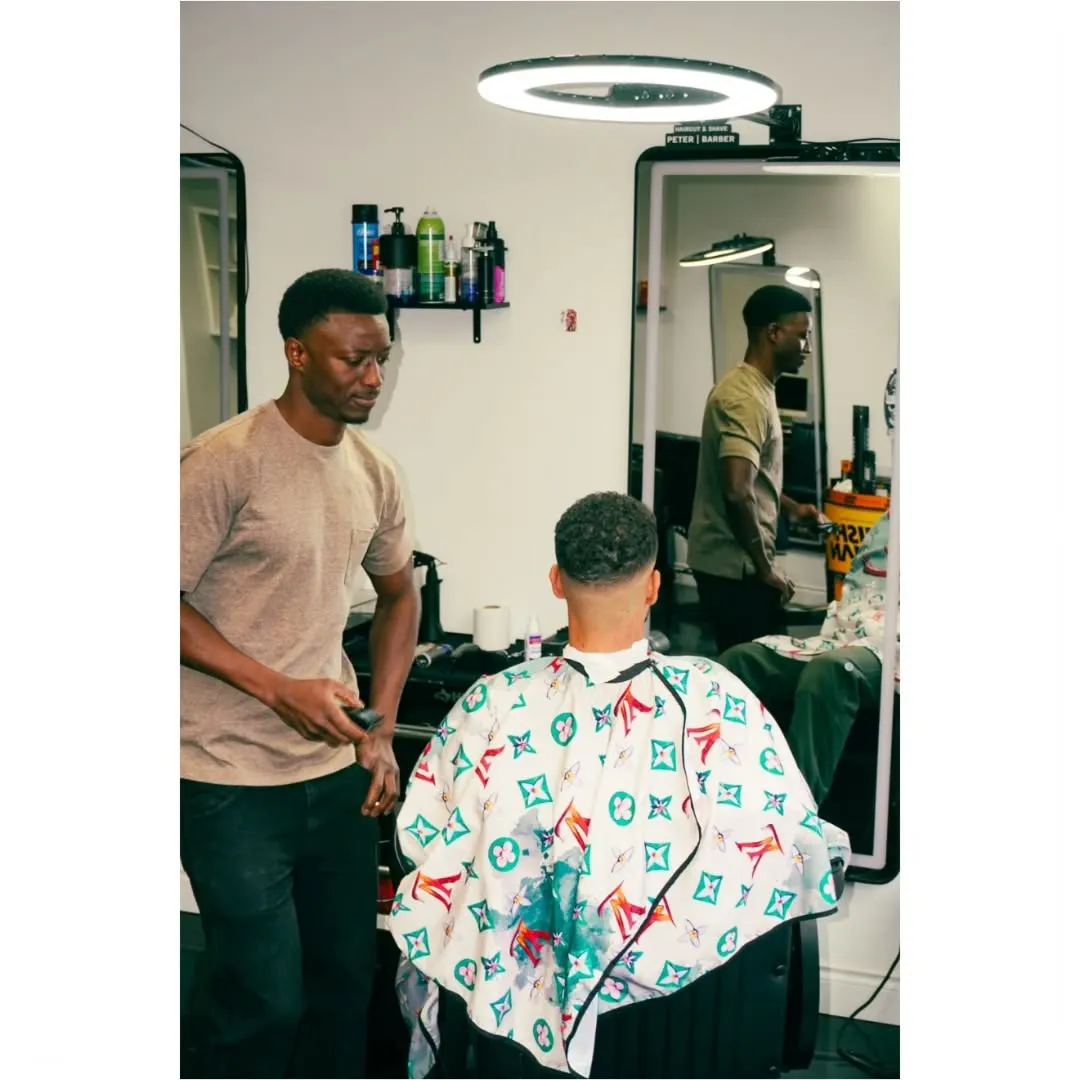
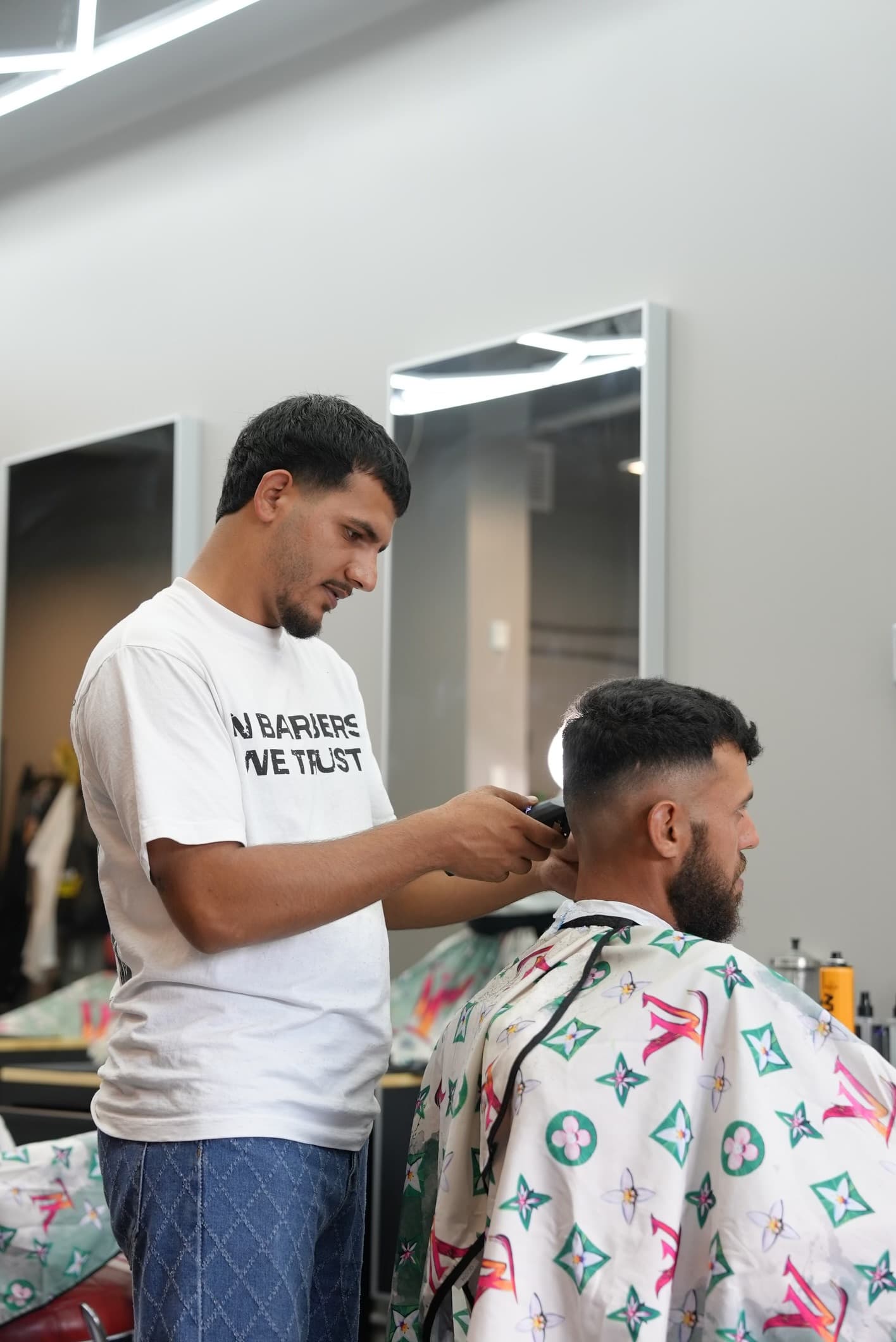
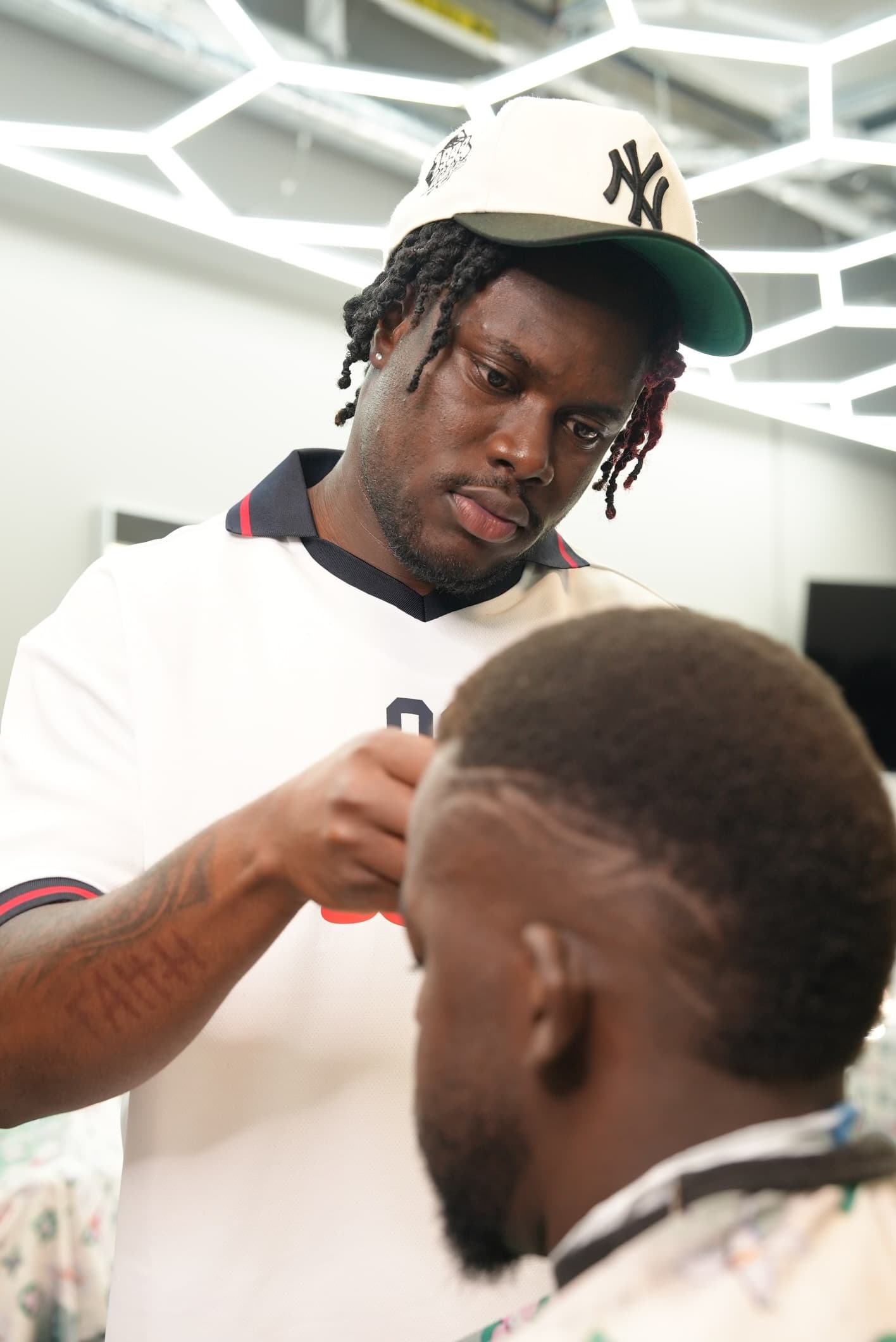
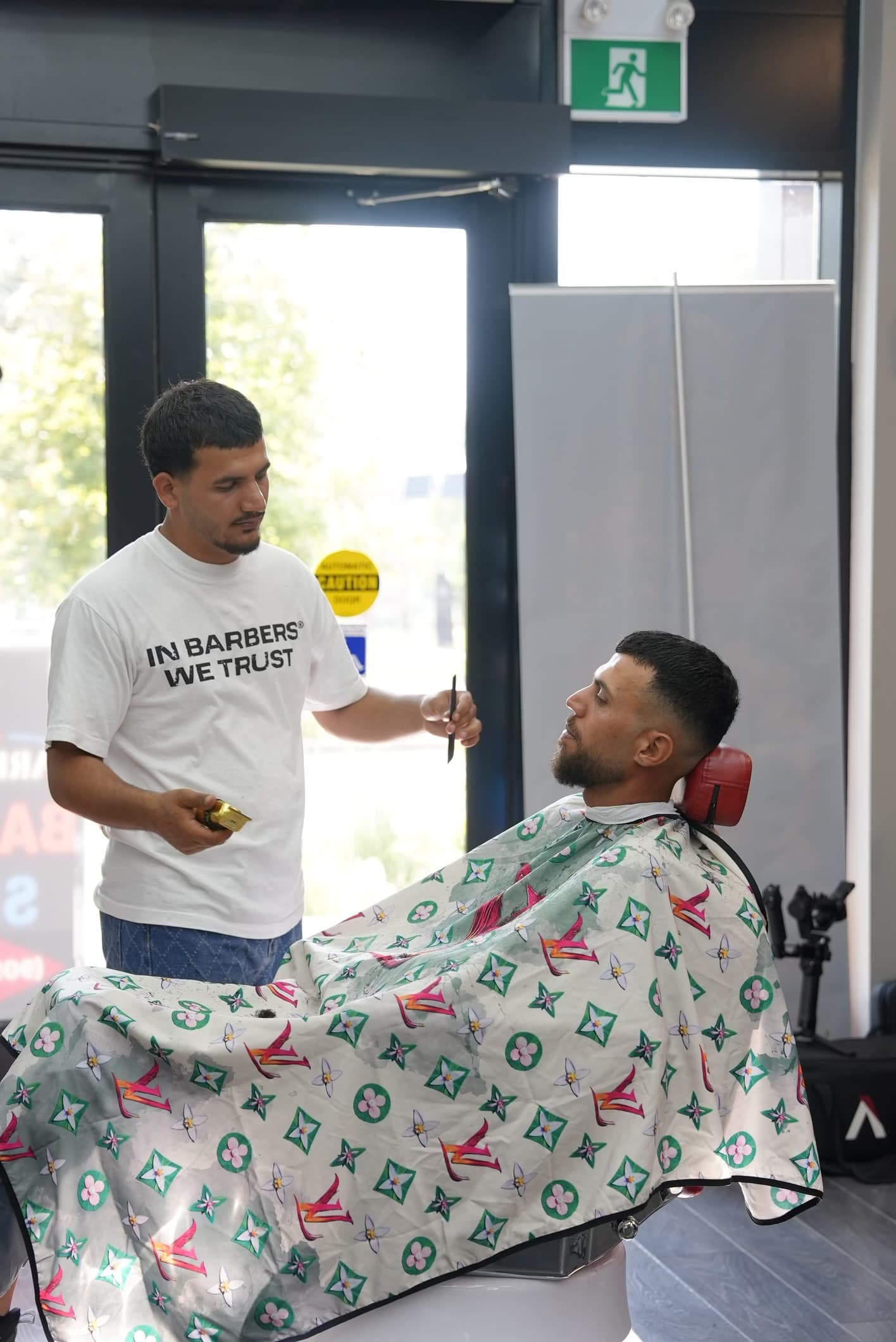
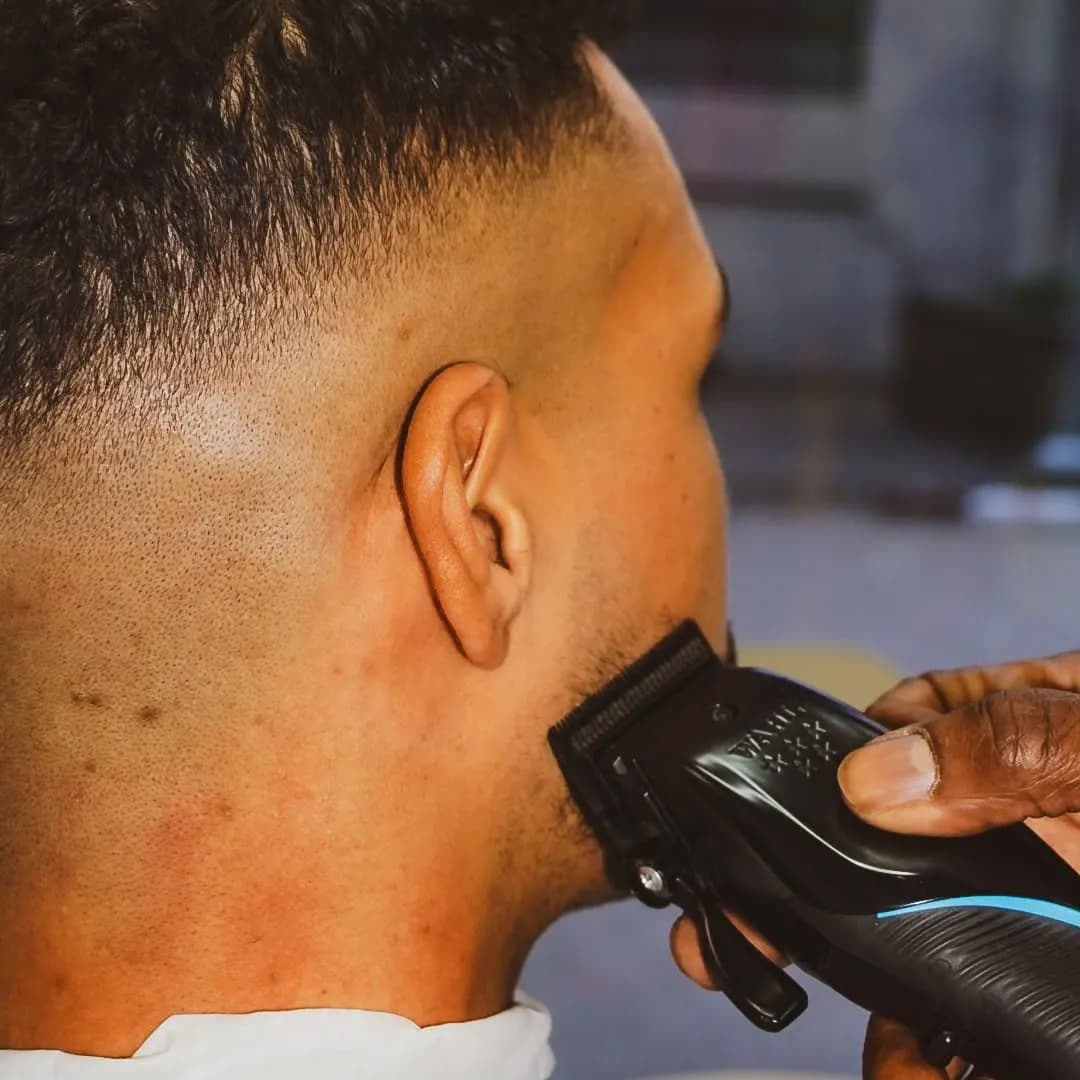
Every photo below is our own work, shot inside our Liberty Village and York U shops. No stock images, just the cuts described in this guide.
Best Cut for
Your Hair Type
Your hair texture plays a big role in how a fade or taper looks once it is cut. Here is what works best:
Thick, Coarse Hair
Fades look especially sharp because the density creates a well-defined gradient. The contrast between lengths is more visible. If you prefer a taper, your barber may use thinning shears to reduce bulk on the sides.
Fine, Straight Hair
Tapers tend to look more natural on fine hair. Fades can sometimes appear too stark because there is less density to create a smooth gradient. A low or mid taper with some texture on top is a reliable choice.
Curly or Coily Hair
Both fades and tapers look incredible. The curl pattern creates natural visual contrast in the transition. Mid fades and drop fades are especially popular. Work with your curl pattern, not against it.
Wavy Hair
Very versatile. Fades highlight the wave pattern by keeping the top full while the sides are clean. Tapers with some length on the sides can add a relaxed, textured feel. Either cut works well.
How to Ask
Your Barber
Communication is everything. Here are the three things your barber needs to know:
The type of fade
Skin, low, mid, high, drop, or burst. If you are not sure, say "I want it clean on the sides but not completely bald" and your barber will guide you.
Where it starts
Point to where you want the shortest part to begin. Low (near the ear), mid (temple level), or high (near the crown).
What you want on top
A fade is just the sides and back. Tell your barber what you want for the top: textured, slicked back, a French crop, or "just clean it up."
Pro tip from our barbers
Bring a reference photo. Even if you cannot describe what you want in barber terminology, a photo tells your barber everything they need to know. Save 2 or 3 photos that show the vibe you are going for.
At Barberhood, every skin fade is finished with straight razor detailing on the perimeter. That razor precision is what separates a clean fade from a great one. It is also why our fades photograph so well, the lines are that sharp.
Keep It
Looking Fresh
A fresh fade looks incredible on day one. The question is how to make it last:
Skin fades: every 1 to 2 weeks
Skin fades grow out fast because the contrast between skin and hair becomes visible quickly. Clippers leave a hard, blunt edge on each strand, so regrowth is more noticeable than with scissor-blended styles. A quick lineup between full cuts keeps it sharp.
Low fades & tapers: every 2 to 3 weeks
Since there is no exposed skin, the grow-out is more gradual and forgiving. A good low fade can look presentable for three weeks easily.
Maintain your neckline at home
A small trimmer can keep stray hairs on the neck in check between visits. Do not try to re-blend the fade yourself though. That is where things go wrong.
Use matte products, not shiny gels
Shiny pomades and wet gels reflect light, which visually blurs the sharp gradient that makes your fade look crisp. Use a matte clay or texture paste instead. It gives you hold and volume without washing out the contrast of the fade.
Keep the scalp clean
Skin fades leave the scalp exposed. Sweat and product buildup can weigh down the transitional hair and make the fade look heavy or flat. A clarifying shampoo (tea tree works well) once or twice a week clears that out and keeps the fade looking structured.
Quick
Comparison
| Taper | Fade | |
|---|---|---|
| Shortest length | Short but still visible | Down to skin |
| Contrast | Subtle, gradual | Sharp, defined |
| Maintenance | Every 2 to 4 weeks | Every 1 to 2 weeks |
| Vibe | Classic, professional | Modern, bold |
| Styling options | More versatile (sides have length) | Top-focused styling |
| Best hair type | All types, great for fine hair | All types, sharpest on thick hair |
| Skill level | Moderate | High (especially skin fades) |
| Grows out | Gracefully (scissor edges) | Quickly (blunt clipper edges) |
Fade Pricing at
Barberhood Toronto
Most Toronto fade haircuts land somewhere around the low-$40s to mid-$50s once you are comparing proper barbershop work. At Barberhood, we keep the menu simple: your fade is part of the haircut price, the consultation is included, and you can add beard work without trying to decode a hidden add-on list.
| Service | Price (CAD) |
|---|---|
| Haircut (includes your fade) | from $40 |
| Haircut + Beard | $50 |
| Lineup / touch-up between cuts | from $25 |
| Long Hair Cut | $70 |
What you are paying for
Fades start at $40 with Brigen or Ismael and $45 with Peter or Mike. That includes the conversation before the cut, the blend, neckline and perimeter detailing, styling, and quick maintenance advice before you leave the chair.
Frequently
Asked Questions
What is the difference between a fade and a taper?
A taper gradually reduces hair length from the top down to the neckline using clipper guards, leaving some hair at the shortest point. A fade takes this further by blending the hair down to the skin (or very close to it), creating a sharper, more dramatic transition. Think of a taper as subtle and a fade as bold.
Which is better, a fade or a taper?
Neither is objectively better. It depends on your style, workplace, face shape, and maintenance preferences. Tapers are more conservative and work well in professional settings. Fades are bolder and sharper but need more frequent touch-ups (every 1 to 2 weeks). A good barber will help you decide based on your hair type and lifestyle.
How often should I get a fade touched up?
Skin fades look best when touched up every 1 to 2 weeks. Low fades and tapers can last 2 to 3 weeks before they start growing out noticeably. At Barberhood Toronto, we offer lineup touch-ups starting at $25 between full cuts.
How much does a fade haircut cost in Toronto?
In Toronto, most solid fade haircuts sit in the $40 to $55 range, depending on the shop, barber, and whether beard work is included. At Barberhood Toronto, a haircut with a fade starts at $40 with Brigen or Ismael and $45 with Peter or Mike. A haircut and beard combo is $50, and a lineup touch-up between cuts starts at $25.
How can I tell if my fade was done well?
Look at the fade in real life, not only in a photo. The transition should look soft under bright light, the weight around the crown should make sense for your head shape, and the neckline should sit clean without being carved too high. At Barberhood, every skin fade is finished with straight razor detailing on the perimeter, then checked from multiple angles before you leave the chair.
How do I ask my barber for a fade?
Be specific about three things: the type of fade (skin, low, mid, or high), where you want the fade to start, and what you want on top. Bringing a reference photo is the best way to communicate exactly what you want. At Barberhood, every cut starts with a consultation so your barber understands your vision.
What products should I use to maintain a fade?
Use matte finish products like clay or texture paste instead of shiny gels or wet pomades. Shiny products reflect light and visually blur the sharp gradient of your fade. For scalp care on skin fades, use a clarifying shampoo (tea tree works well) once or twice a week to clear sweat and product buildup that can make the fade look flat.
Why does a taper grow out better than a fade?
Tapers incorporate more scissor work, which creates a cleaner, softer cut on each hair strand. Clippers leave a harder, blunter edge that makes regrowth more noticeable and uneven. The softer scissor-cut edges grow back more uniformly, so a taper holds its shape longer between barbershop visits.
What is a taper fade?
A taper fade is a hybrid that combines both techniques. The upper portion of the sides uses a gradual taper transition, while the lower portion near the hairline blends into a fade (often down to skin). It gives you the versatility of a taper with the sharpness of a fade. If you ask for a taper fade, bring a reference photo so your barber knows exactly where you want the taper to end and the fade to begin.
Is a fade or taper better for thick hair?
Fades generally look sharper on thick hair because the density creates a more defined gradient. Thick hair holds the contrast between lengths well. Tapers also work, but thick hair can sometimes look bulky on the sides without the closer crop of a fade. Your barber may use thinning shears alongside a taper to reduce bulk if you prefer the more conservative look.
What is the difference between a skin fade and a taper?
A skin fade takes the sides and back all the way down to bare skin, creating maximum contrast, and needs a touch-up every 1 to 2 weeks to stay sharp. A taper never goes to skin; the hair just gets gradually shorter toward the hairline, so it grows out gracefully over 3 or more weeks. Choose by answering two questions: how much scalp do you want to show, and how often will you come back to the shop.
What is the difference between a burst fade and a drop fade?
A drop fade is a full fade whose line curves down behind the ear, following your head shape. A burst fade only fades in a semicircle around the ear and leaves the neckline at length, which is why it pairs with mullets, mohawks and other styles that keep hair in the back. Point at the area behind your ear during the consultation and your barber will know which one you mean.
Can I get a fade or taper with curly hair?
Absolutely. Curly and coily hair textures look incredible with both fades and tapers. Mid fades and drop fades are especially popular because the curl pattern creates a natural visual contrast. For tapers, the texture adds depth to the gradual transition. Bring a reference photo of someone with a similar curl pattern so your barber can plan the cut to work with your natural texture.

Ready for a
Perfect Fade?
Book with one of our barbers in Liberty Village or at York U in North York. Every cut starts with a consultation so we get it exactly right.
Toronto
68 Abell St #8, Liberty Village. Near Queen West and Ossington.
Book Toronto→Meet the Toronto TeamNorth York
105 The Pond Rd #50, inside The Quad, steps from York University.
Book North York→Meet the York U Team